


Review
Style and Solitude:
The History of an Architectural Problem
REVIEW BY: CLELIA POZZI




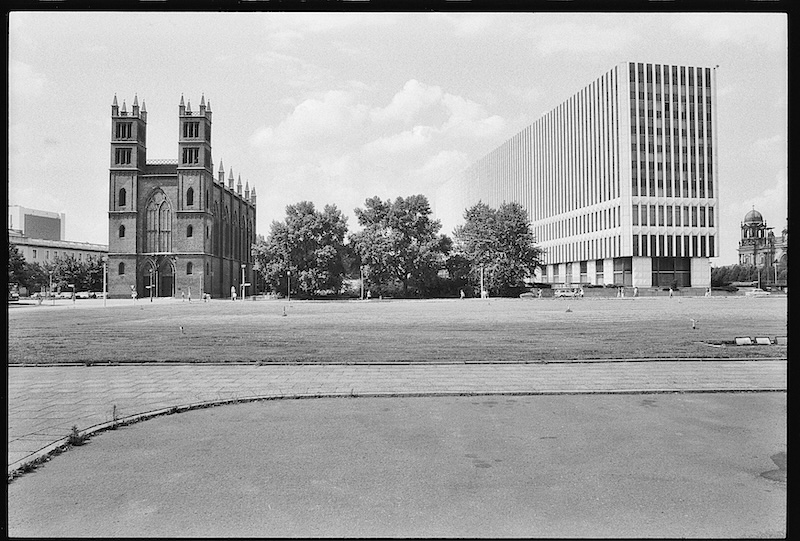
REVIEW BY: CLELIA POZZI
September 5, 2025
The notion of style has little sway in architectural discourse today. Architects hesitate to define their work through a personal style, perhaps resisting the modernist trope of the “hero architect.” Architectural historians have long viewed style as a problematic concept associated with determinism, Eurocentrism, and racism, and no longer employ it as a historiographic principle. Design schools, too, challenge the traditional narratives of architectural history surveys, prioritizing cultural diversity, social and environmental justice, and bottom-up building practices over conventional stylistic epochs. By and large, style is seen as out of step with the pressing preoccupations of our time. But as Mari Hvattum explains, style is not an outdated concept nor an isolating one––it is a prompt to consider one’s place in history.
In Style and Solitude: The History of an Architectural Problem, Hvattum understands style as a principle of communality and continuity across time and space. Focusing on the German context in the late eighteenth and early nineteenth centuries, her book offers an episodic history of the conflicting conceptions of style and how they came to influence modern architecture. Her history employs an unconventional chronology that begins with the present. In a competition brief by Rem Koolhaas, Hvattum discovers echoes of modernist debates involving Hermann Muthesius, Walter Curt Behrendt, and the De Stijl group among others, where subtly differentiated positions existed regarding the nature of style, its connection to time, and its potential to either constrain or liberate architectural expression. These contrasting views were not new. Hvattum traces these modernist debates back to the late eighteenth century and then through the 1850s and 1860s to show how, across those decades, style was variously understood as a rhetorical mode of expression, an index of a particular time and place, a catalyst for emotional response, the ideal essence of art, an articulation of national ambitions, and a set of formal tropes and ways of making. This inverted chronology not only places the contemporary ambivalence toward style in historical perspective, but also successfully shows how discussions about style are tied to broader inquiries into what it means to be modern. It is no coincidence that competing ways of thinking about style were entangled with other notions central to modernity, like zeitgeist, Stimmung, taste, imitation, and authenticity. None of these conceptions existed in isolation from one another, and the book’s chapters address the porous boundaries among them.
Through her analysis of key positions in style thinking, Hvattum’s book diverges from the exhaustive historiographical approach taken by art and architectural historians like Wolfgang Hermann in In What Style Should We Build? (1992) or Caroline van Eck and others in The Question of Style in Philosophy and the Arts (1995), who carefully traced the intellectual genealogy of style debates in architecture three decades ago. Hvattum also departs from more recent studies focused on the revivals of particular historical styles, like Alina Payne and Lina Bolzoni’s The Renaissance in the 19th Century (2018). Rather, her book builds on these important works from a practical perspective, distilling what style meant and how it affected architecture making and history writing.
One of Hvattum’s key points is precisely that style was a “profoundly useful” concept (56), and what seems most useful is the pliability of this concept to serve very different purposes. Chapters 2 through 4 explore its main applications in the second half of the eighteenth century, when style entered architectural parlance from classical rhetoric and transformed from an expression of appropriateness into a controversial aesthetic concept. First, style became the key dating device of a new form of art history, inaugurated by Johann Joachim Winckelmann’s notion of period style, that understood architecture as the index of a particular time and place, and thus a representation of the zeitgeist. In parallel, as an aesthetic of experience emphasized the emotional relationship between architecture and its audience, style became a medium for eliciting specific moods through building. This was reflected in practical catalogues of building and garden styles as well as ambitious national projects, like Karl Friedrich Schinkel’s unbuilt Cathedral of Liberation, designed to celebrate the 1813 German victory over Napoleon through an intensified Gothic style. Next, idealist thinkers like Goethe and Schlegel made style a measure of perfection in art, ushering a lasting conceptual distinction between the idea of Style and historical styles––a distinction still crucial to understanding how style might endure in architectural discourse, despite ambivalence toward personal styles. The later chapters explore the political and material entanglements of style’s aesthetic notions in the early nineteenth century. Chapters 5 and 6 investigate how the principle of correspondence between style and zeitgeist fueled a search for a “style of our own” that played out in heated debates over historical revivals, material and typological innovation, as well as design competitions––such as King Maximillian II of Bavaria’s international call for a new German style at once modern and rooted in history. Hvattum analyzes this curious competition to explore the limits of eclecticism as a method for creating a new style. What also becomes evident, however, is that nationalism too was a kind of eclectic project, drawing from architectural styles past and present to shape its aspirations. In the final chapter, Hvattum revisits Gottfried Semper’s famous style theory, which she studied extensively in a previous book, to highlight the material and social dimensions of his understanding of style as a continuous renegotiation of inherited models of making. This return to Semper’s ideas feels particularly timely amid growing interest in materiality and fabrication, and serves as a fitting conclusion to the book, suggesting that far from being a straightjacket, style might help us navigate our place within architectural history.
While most readers with some familiarity with architecture will have a preconceived understanding of “style” as a set of rules or a marker of identity, Hvattum’s second keyword—“solitude”—is deliberately cryptic and affective. If as an art historical category style was a principle of “epochal solitude” (180) that bound an era to a singular artistic expression, Hvattum shows that in architecture style was about participation in a tradition, ultimately positioning architecture as a kind of shared practice that transcends historical divides. Style, therefore, is not only an “antidote to solitude” (15), as Hvattum writes, but also a medium for balancing individuality and collectivity––and possibly raising questions about whether such aspirations might impose new forms of exclusion. This becomes clear in the central chapters of the book, where Hvattum uses the language of solitude and connection to challenge familiar tropes in art and architectural history, like the genius artist, the modern circumstances of fragmentation and differentiation, and the tension between tradition and innovation.
It is tempting to link Hvattum’s framing of solitude to the Covid-19 pandemic, during which she wrote this book and when desires for connection mounted. What is distinctive about Hvattum’s book is in fact her personal connection with the material, her desire to engage with the historical figures and ideas she studies. This engagement comes through in the book’s candid moments, such as when Hvattum admits to spending “an awful lot of time” (12) tracking down sources. It also shows in her careful analysis of style across a wide range of writings––essays, journal articles, lectures, catalogues, and other print media from the German context, many translated into English for the first time. At the same time, Hvattum offers meticulous analyses of design projects that will appeal to scholars and students alike. For instance, through an attentive description of the plan, circulation, and decorative program of Munich’s Glyptothek, Hvattum shows how Leo Von Klenze curated a chronological display of classical styles in art within an idealized classical building, positioning the structure itself as transcending those styles through Style. Similar descriptions reveal her effort to understand how meanings travel across space and time in architectural practice.
Style and Solitude is a remarkable book because it inhabits a quiet space in architectural discourse, far from the loud polemics, “urgency,” and instant gratification that saturate social media. It offers clarity on one of architecture’s thorniest concepts while acknowledging the difficulty in defining what style is and where it exists. If, as Hvattum suggests, style is not confined to a fixed historical moment but remains mobile, how might contemporary architectural practice continue to engage with—or resist—this mobility? In tracing the contradictions and negotiations that shape style’s movements, Hvattum reminds us that architecture is adept at accommodating ideas that circulate and transform, whether they resurface in recognizable forms or in more oblique ways.
Clelia Pozzi is an adjunct assistant professor of architecture and urban history at Pratt Institute. She works at the intersection of the histories of architecture, aesthetics, and techniques, with a special focus on the preservation of the built environment in the nineteenth and twentieth centuries. She is currently pursuing a joint PhD degree in Architecture and the Interdisciplinary Humanities at Princeton University.
Image Credit: Gerd Danigel, 1990